
Background
Micromeritics is a company that manufactures and sells laboratory instruments, which are widely used by enterprises, research institutes, and universities. Replacing parts and consumables for these instruments is an indispensable task. As the product range and customer base expanded, accurately identifying the parts and consumables each customer needed—and producing tailored quotations—gradually became a time- and labor-intensive process.
Dminrostudio had long supported Micromeritics by maintaining their Chinese official website. The client believed we could also develop an automatic quoting system for parts and consumables to automate the work described above.
Requirements analysis
During the requirements analysis, we learned that after-sales staff often need to handle customers’ requests to replace parts and consumables. These requests come via email or phone, but the service process is largely the same: first record customer information, the consumable/part number (item/material number), and quantity. After confirming sufficient inventory, produce the corresponding quotation sheet. Then add various miscellaneous items and additional terms to create a complete quotation. The quotation also serves as an initial order; once the deal is confirmed, the order can be handed over to the warehouse for fulfillment and shipment.
This is somewhat similar to a B2C e-commerce model—for example, users can add multiple items to a cart and submit them together, track order status, and maintain frequently used shipping information. At the same time, it also shows typical B2B characteristics: communication is more formal (usually via email), many steps require formal documents (a quotation is one of them), users cannot see product prices before receiving the final quote, and payments are business-to-business, etc. The number of users and orders is not large, but variability is high, and most users are repeat buyers—making customer data management especially important.
On the admin side, the client wanted to maintain an accurate customer database. This requires users to provide sufficiently complete and truthful information during registration, including business qualifications. Moreover, before users can formally submit an inquiry, administrators perform a final review of user information to ensure authenticity. This strict screening mechanism virtually eliminates invalid users.
Product management also aims to be efficient, primarily through bulk import. Products are matched against existing database records via each product’s unique item/material number, enabling batch updates.
For quote generation, once an administrator receives an inquiry submitted by a user, products use baseline prices from the database by default, while still allowing adjustments. The administrator then adds miscellaneous items such as tax rates to produce the final quotation. The quotation must be available for download or delivery to the user in PDF format.
On the user side, because there are many products, all products—except commonly used ones—are presented through fuzzy search. Users have a “products pending inquiry” area similar to a shopping cart, allowing them to bundle multiple products into a single inquiry.
Implementation
Framework
For the framework, we continued to use Drupal, which we know best. Although in theory it may not be the optimal solution, in keeping with the principle of “Getting things done,” Drupal remained the best choice for us. Drupal’s Entity API makes it possible to implement CRUD (create, read, update, delete) for any entity with almost no code. Its mature and stable user and permission systems also make it easy to assign permissions by role. These are outstanding features that are hard to refuse as experienced Drupal users. With very little code, we implemented the following ER structure:
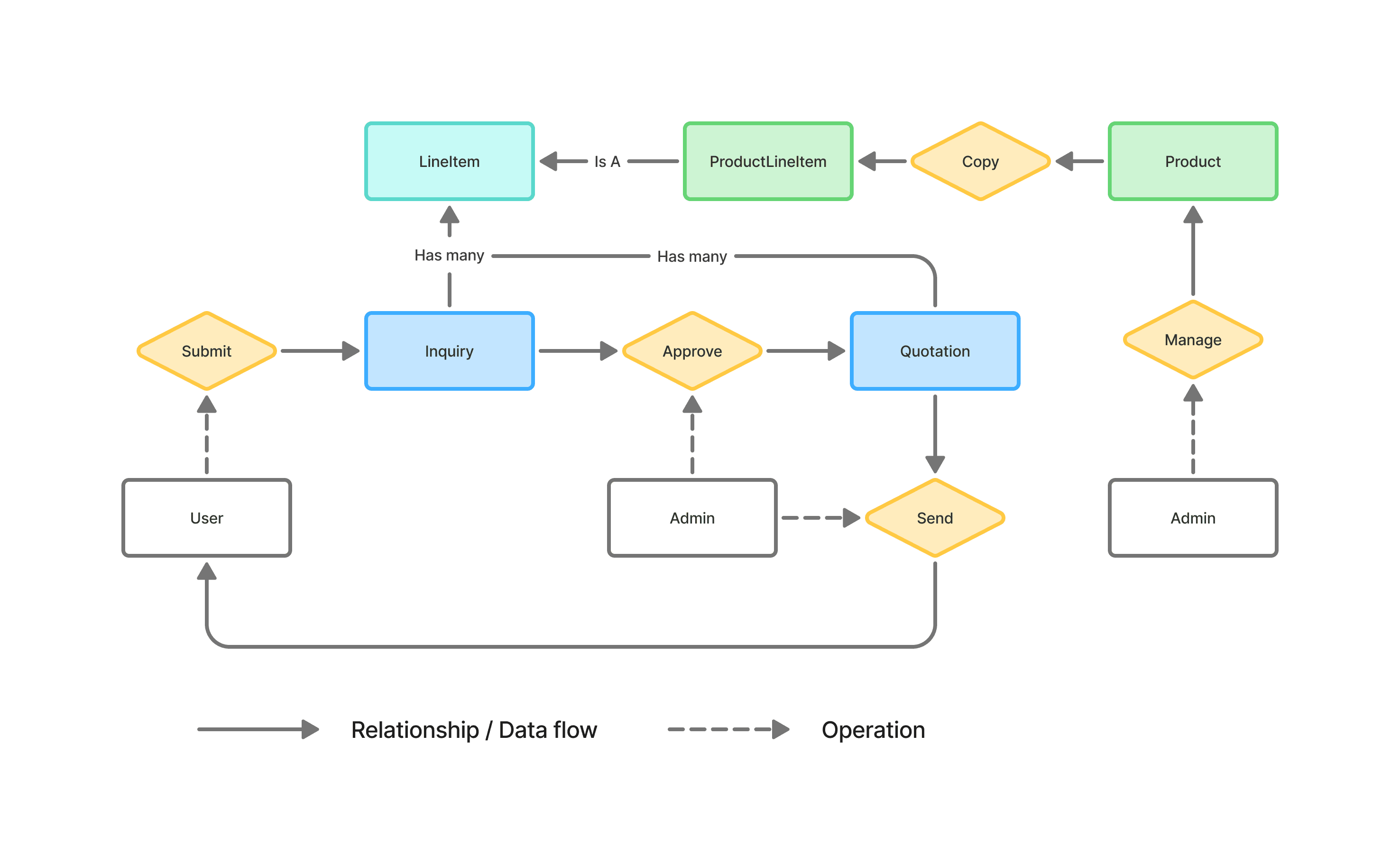
We did not use a traditional B2C e-commerce module. Instead, starting from the client’s needs, we redefined and implemented the entire inquiry workflow and logic from scratch.
UI design
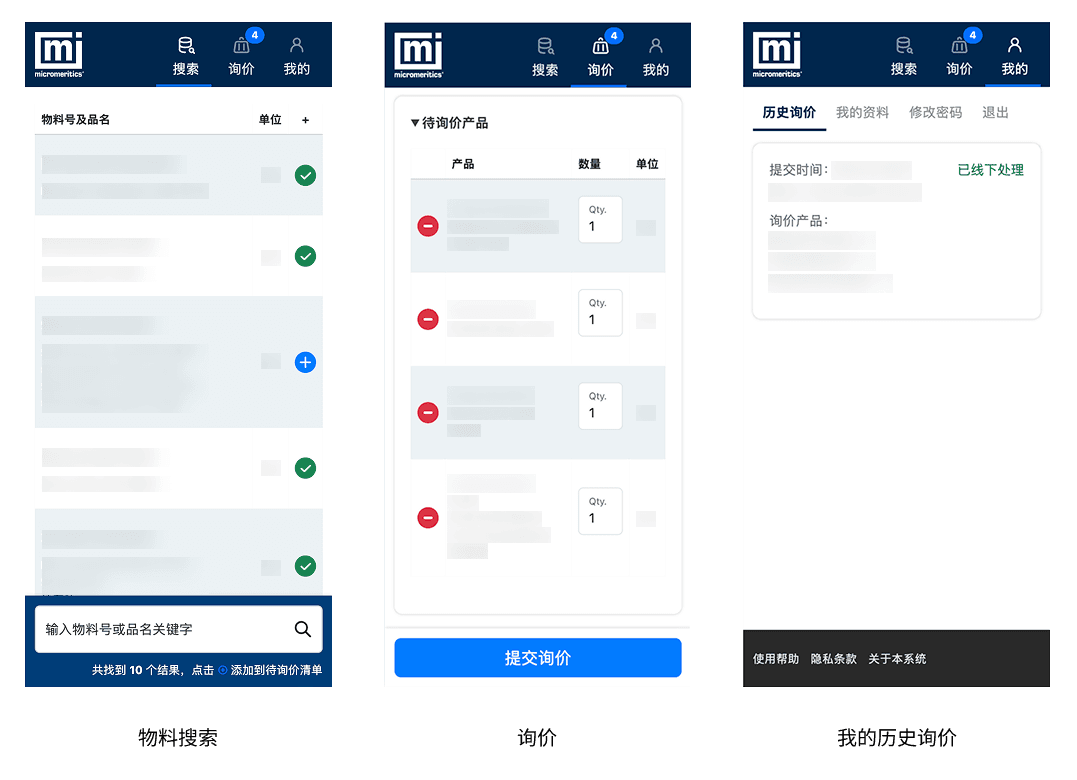
The user-side interface follows a minimalist principle—essentially a plain text table plus a search box. Within it, users can perform fuzzy search, add items to a cart (the pending inquiry area), submit inquiries, and so on.
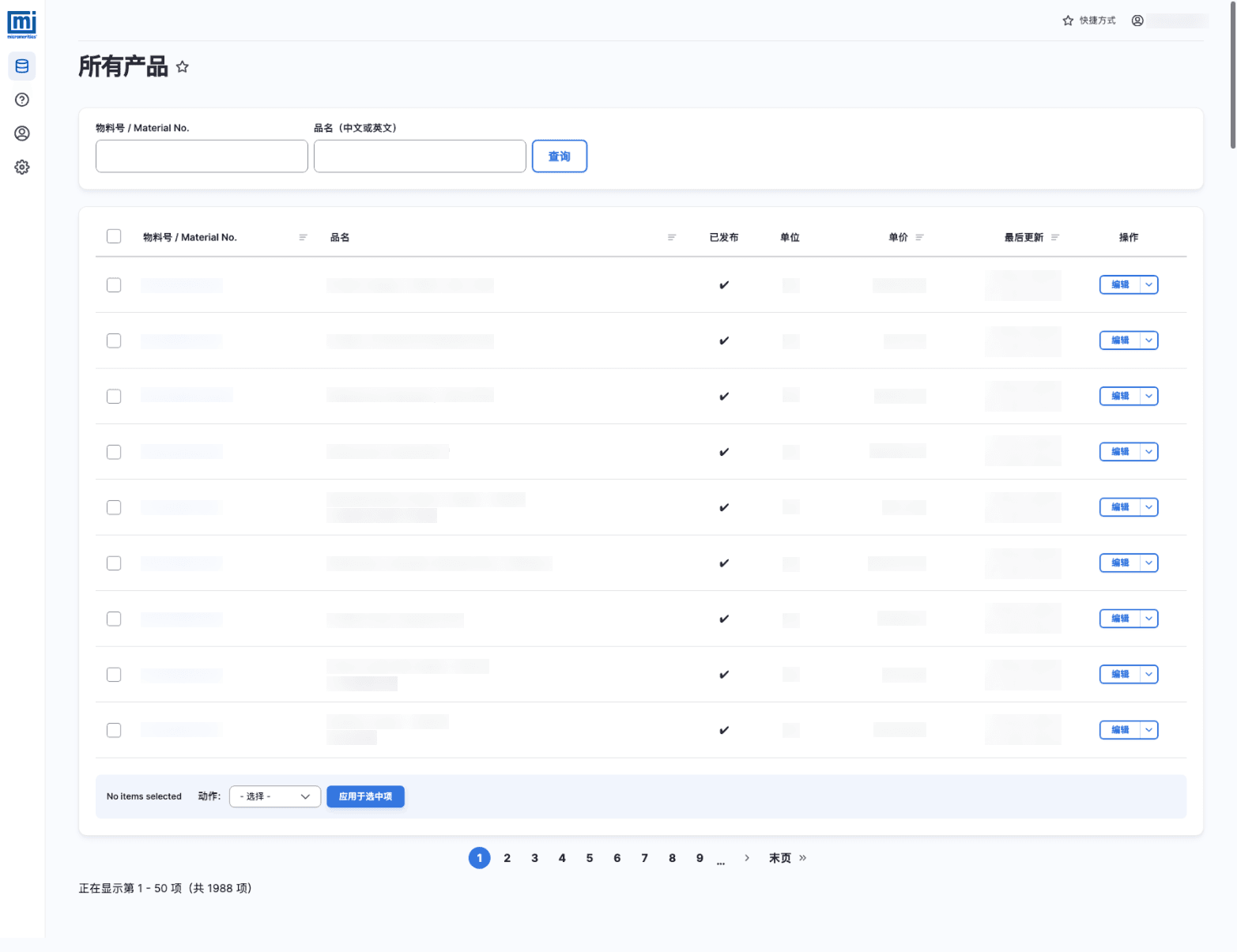
The admin side uses Drupal’s latest admin theme, Gin. It’s a very lovely theme, and I personally like it a lot. We also reorganized Drupal’s admin operations for the client’s management staff, making Drupal’s admin interface shift from developer-friendly to more user-friendly.
Follow-up
The inquiry system passed the client’s acceptance smoothly and officially went live, and both the client and their customers have continued using it. For developers, there’s no better reward than seeing a product you built being used continuously by real users. Of course, the system has also been iterated and upgraded over time—for example, under the recent impact of China–US tariff policies, the system added tariff functionality in a timely manner to respond to changes in the trade environment.
About The Author

Dan Hu
Full-stack developer, co-founder of dminorstudio.