
For international B2B companies operating in China, WeChat marketing is often an established part of their local digital strategy. Many businesses have already launched official WeChat accounts, regularly publish product updates, company news, and industry articles, and invest in content creation and audience growth.
Yet after months of activity, management often asks a reasonable question: What business value is our WeChat marketing actually delivering?
Article views may be increasing, follower numbers may look promising, but qualified inquiries remain limited. Sales teams rarely identify WeChat as a source of meaningful opportunities, while marketing teams struggle to demonstrate how their content contributes to customer decisions.
Over time, WeChat becomes another channel that needs to be maintained rather than a marketing activity that actively supports business growth.
The problem, however, may not be that WeChat is ineffective for B2B marketing. It may be that companies are treating it primarily as a corporate news channel instead of a platform for building customer relationships, establishing trust, and supporting long-term sales development.
B2B WeChat Marketing Should Be More Than Publishing Company News
Many international companies build their China WeChat content around materials provided by global headquarters. A new product launch becomes a translated announcement. A global trade show generates an event recap. Corporate achievements, awards, and company updates fill the publishing calendar.
While this information helps maintain brand visibility, it does not necessarily give Chinese B2B buyers a compelling reason to engage with the content.
For industrial manufacturers, technology providers, and professional service companies, potential customers are often more interested in practical questions. How does a product solve a specific technical problem? Which solution is suitable for a particular application? What should buyers consider when evaluating equipment? Does the supplier have relevant industry experience?
An article addressing a real technical challenge may be more valuable to a prospective customer than another announcement about the company's global achievements.
This is why an effective B2B WeChat content strategy should shift from "What does our company want to publish?" to "What information do our customers actually need?"
Industry applications, technical insights, product comparisons, case studies, and common purchasing questions can all become valuable content topics. For customers who already know the brand, WeChat can also provide ongoing product updates, technical resources, and service information.
The value of WeChat content is not limited to generating a single article view. It is about keeping your brand relevant and memorable when potential customers are not yet ready to buy.

Follower Numbers Are Not the Only Measure of B2B WeChat Success
Consumer brands often focus heavily on building large audiences. B2B companies operate differently.
An industrial equipment manufacturer may serve a relatively narrow group of industries, with purchasing decisions involving engineers, technical managers, procurement teams, and senior executives. Even a large WeChat following may have limited commercial value if those followers do not represent the company's target customers.
Rather than focusing exclusively on follower growth, B2B companies should pay closer attention to audience relevance and engagement quality.
Which content topics attract professionals from target industries? Which product resources generate meaningful interest? Are readers visiting product pages, requesting information, or contacting the sales team through the official account?
These indicators can provide a more useful understanding of marketing performance than article views alone.
Of course, WeChat does not always generate immediate inquiries. For B2B products with long sales cycles, a prospect may follow an account for months before beginning a formal supplier evaluation.
Companies therefore need to evaluate WeChat across multiple stages of the customer journey, including brand engagement, lead nurturing, and sales opportunities.
The objective is not to make every article generate an inquiry. It is to build a communication channel that supports customers throughout their purchasing journey.
WeChat Should Support Sales Relationships, Not Operate as an Isolated Marketing Channel
For many international B2B companies, business development in China still depends heavily on trade shows, distributors, and local sales teams.
WeChat can play a valuable role in extending these relationships beyond the initial interaction.
Imagine a German industrial equipment manufacturer attending a trade show in Shanghai. Its sales team meets several potential customers, but many of them do not have immediate purchasing plans.
If the company encourages these prospects to follow its official WeChat account, it can continue providing useful technical articles, application examples, product updates, and industry insights after the event.
When those prospects eventually begin evaluating suppliers, the brand may already be familiar to them.
WeChat content can also support direct sales conversations. Instead of repeatedly sending generic brochures, sales representatives can share relevant Chinese-language articles that explain technical concepts, demonstrate applications, or address common customer concerns.
These resources can make complex products easier to understand and give customers useful information to share with other stakeholders involved in the purchasing decision.
This also means WeChat marketing should not be managed entirely separately from sales and technical teams.
Salespeople understand the questions customers frequently ask. Technical teams know how products perform in real applications. Marketing teams can turn that knowledge into clear, engaging content.
When these functions work together, WeChat becomes more than a publishing platform. It becomes a practical resource for business development.
From Content Engagement to Lead Nurturing: Building
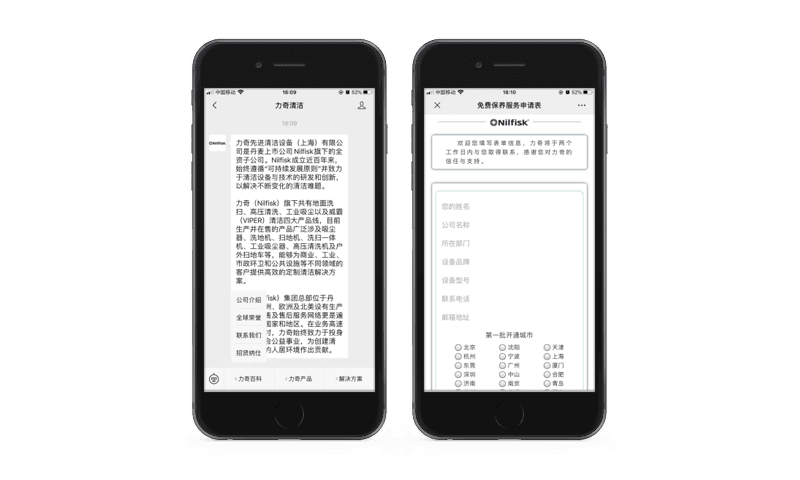
Many companies invest considerable effort in maintaining their WeChat official accounts but give little attention to what happens after someone reads an article.
A prospect may find a technical article useful and become interested in a product, yet struggle to locate detailed specifications, relevant solutions, or a suitable sales contact.
In that situation, the content has created interest without providing an effective next step.
A stronger WeChat strategy connects content engagement with relevant customer actions.
Technical articles can guide readers toward detailed product information. Industry case studies can link to related solutions. Trade show content can provide follow-up inquiry options. Official account menus can organize product catalogs, website links, and sales contact information.
For companies with multiple product lines or longer purchasing cycles, WeChat interactions can also be connected with customer relationship management processes where appropriate and in compliance with applicable privacy and data protection requirements.
This allows businesses to develop a clearer understanding of customer interests and support more relevant follow-up activities.
However, companies do not necessarily need sophisticated marketing automation from the beginning.
For many B2B businesses, improving content relevance, account navigation, contact options, and basic performance measurement can create a stronger foundation than adding complicated features without a clear strategy.
How Dminorstudio Helps International B2B Companies Get More Value from WeChat
At Dminorstudio (DMS), WeChat marketing is approached as part of a broader China B2B digital marketing strategy, rather than simply a content publishing activity.
For international industrial manufacturers, technology providers, and professional service companies, Dminorstudio connects WeChat content strategy, official account management, customer engagement, and integrated digital marketing to help brands communicate more effectively with Chinese audiences.
At the content level, the focus is on turning technical expertise, product applications, and industry experience into professional Chinese-language content that local customers can understand and find useful.
At the operational level, a structured approach to account management, content planning, audience engagement, and performance analysis helps businesses maintain more meaningful relationships with their target markets.
At the broader marketing level, WeChat can work alongside Baidu SEO, Baidu PPC, localized Chinese websites, and offline business development activities, creating a more connected customer experience.
Dminorstudio also brings experience supporting international brands with China-focused digital marketing initiatives. Its work involving WeChat content, visual communication, account operations, and audience engagement reflects the importance of adapting global brand expertise to local market expectations.
For international B2B companies, the central question should not simply be, "How many WeChat articles should we publish each month?"
A more valuable question is: How can WeChat help our brand stay connected with Chinese buyers and support meaningful business relationships over time?
The Real Goal of B2B WeChat Marketing Is to Build
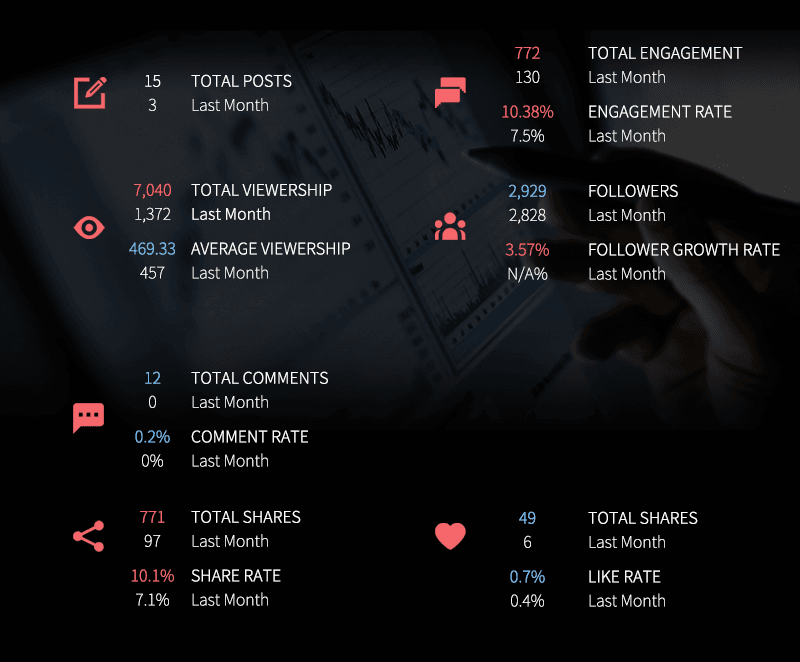
In China's B2B market, customer relationships rarely develop through a single article or advertisement.
For technically complex products and services with long purchasing cycles, trust develops through consistent communication, relevant expertise, and reliable support.
WeChat can become an important part of that process, provided companies understand its role within the broader B2B customer journey.
It should not simply be a Chinese translation of corporate headquarters' news. Nor should it be a social media account focused only on increasing article views.
Instead, WeChat should help international brands maintain a professional presence, support customer research, strengthen existing relationships, and create opportunities for future sales conversations.
Dminorstudio helps international B2B companies integrate WeChat Marketing, Baidu SEO, Baidu PPC, and China-focused digital marketing strategies to turn WeChat from a basic content publishing channel into a valuable platform for brand trust, customer engagement, and long-term business development.
If your company has been operating a WeChat official account in China but still struggles to demonstrate its business value, the answer may not be to abandon WeChat.
It may be time to rethink how WeChat fits into your overall B2B marketing strategy.
About The Author

Stephen Tseng
Co-founder of dminorstudio. regularly writes about the intersection of AI, SEO, and B2B growth strategy.