
The Short Answer: It Depends on Your Specific Case
Yes, some foreign companies can run Baidu Ads without a mainland Chinese legal entity. But that is a conditional yes, not a blanket one. Access can be possible through a local Baidu marketing agency that applies, submits documents, and manages review on your behalf. Whether it works for your specific company is case-specific and subject to Baidu's review.
Here is what makes the answer honest rather than tidy. Baidu's published requirements for enterprise advertisers center on a valid business license, legal-representative identification, and corporate bank-account verification, with direct self-service registration typically available to companies holding a mainland Chinese business license. The public rules do not contain a standalone eligibility clause that clearly addresses overseas companies without a mainland entity. They also do not flatly prohibit it. The requirements are written as general conditions for all promotion accounts, not as domestic-only rules.
So a foreign advertiser sits in a gray zone that the public documentation does not fully resolve. That is exactly why a case-specific review matters more than a generic rule of thumb.
One distinction to hold onto before you read further: getting an account approved and running a campaign that performs are two separate questions. Baidu's review process checks advertiser identity, industry qualifications, and website compliance. It does not promise that your traffic converts. This guide covers the access side first, the routes, the eligibility factors, the documents, the common blockers, and how a feasibility check works, then points you toward a consultation before you spend on localization.
Two Ways to Access Baidu Ads: Direct or Through a Local Agency
Baidu describes access through two practical routes: direct application through its own marketing channels, or application and management through a local agent or service provider. Which one fits you depends mostly on whether you hold a mainland Chinese business license.
The direct route is built around a mainland entity. The general flow runs from submitting company and contact details, through qualification review, paying the account-opening fee and signing a promotion contract, to building the account and keyword plan and launching. A company with a mainland license can apply to Baidu or a first-tier reseller directly. Overseas companies without that license generally cannot contact Baidu directly and are steered toward a local agency instead.
That is where the agency-mediated route comes in. A local agent can assess eligibility, prepare materials, submit the application, and communicate with Baidu's review channels on your behalf.
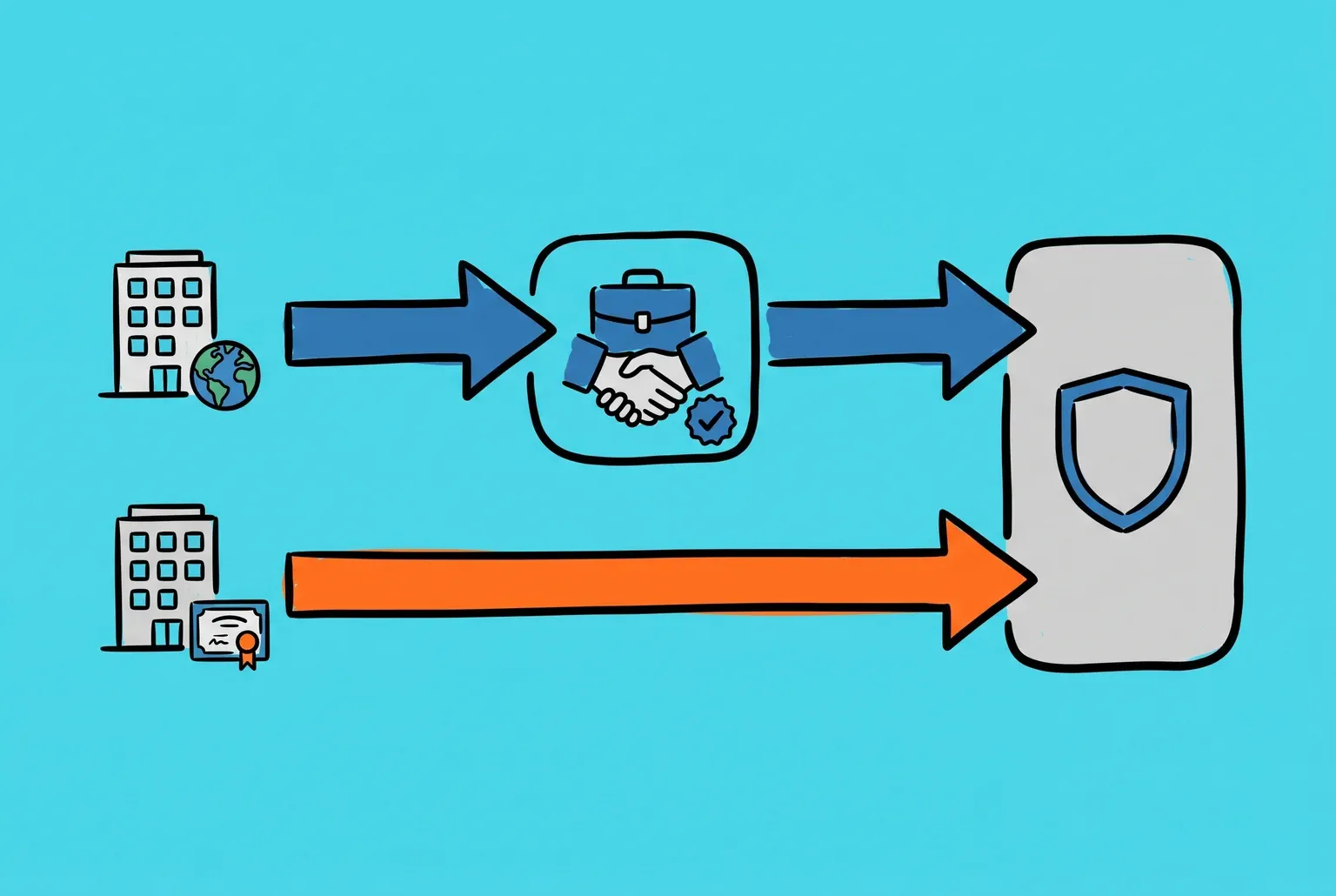
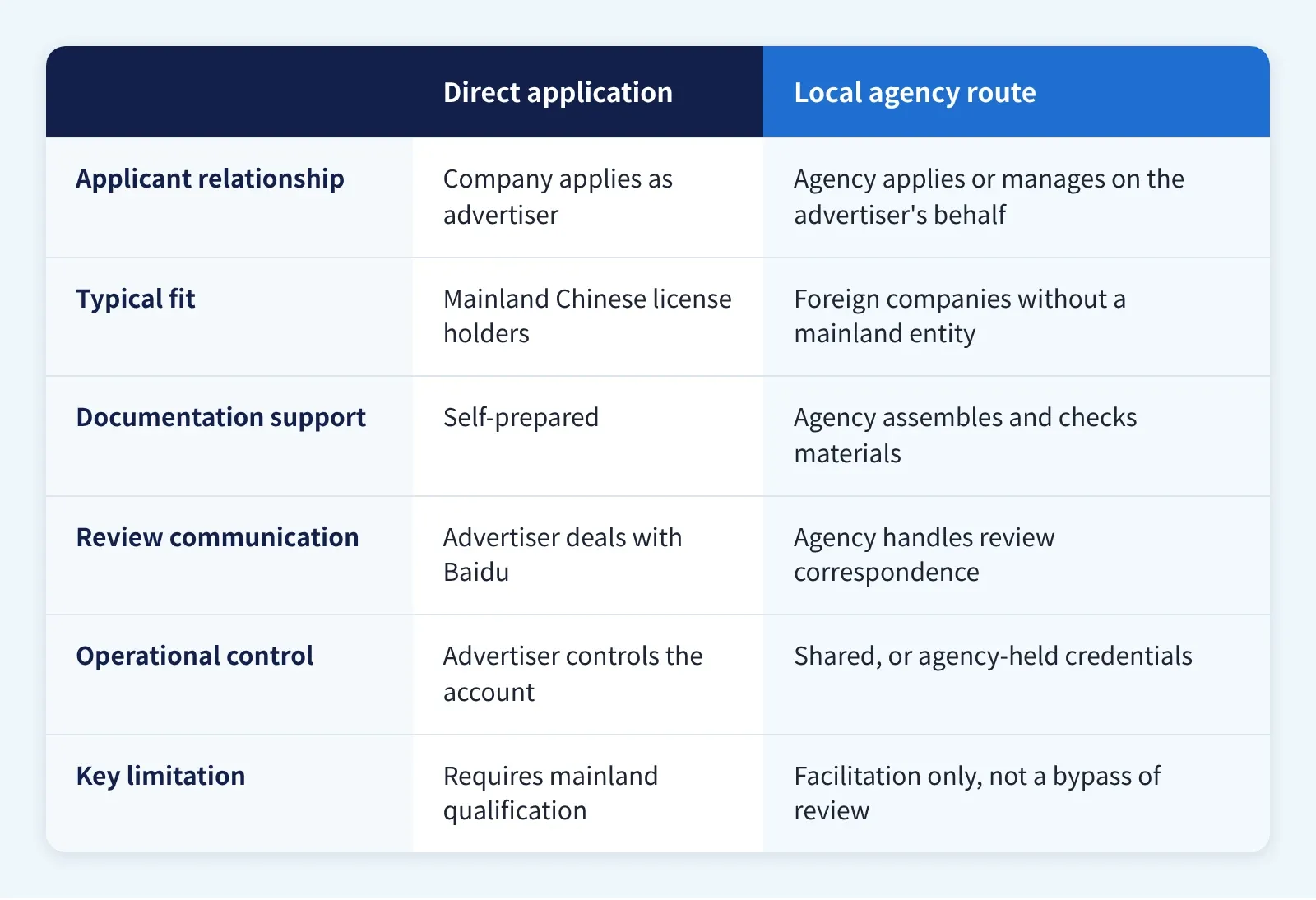
The important caveat: agency involvement can smooth documentation and communication, but it does not override Baidu's qualification requirements, platform policies, or approval decisions. Approval still depends on Baidu's review of your identity, documents, landing page, and industry fit. An agency can improve how well your case is presented. It cannot promise the answer.
What Factors Shape Your Eligibility for Baidu Ads?
Before you pay for translation, media, or a China landing page, run your own rough feasibility screen. Baidu evaluates advertisers across subject qualification, industry-access permissions, account information, website consistency, and content compliance. Those categories map cleanly onto questions you can answer yourself right now.
Work through these:
- Corporate identity. Can you produce verifiable foreign business registration? Advertisers generally need to submit legitimate business-identity materials for review, and the name on those documents should match the company behind the website and the ads.
- Consistent identity across assets. Your company name, website ownership, and business scope should line up. Baidu checks that the promoted site is lawful, complete, and consistent with the submitted qualifications. Mismatches between the registered entity and the domain owner are a common reason a case stalls.
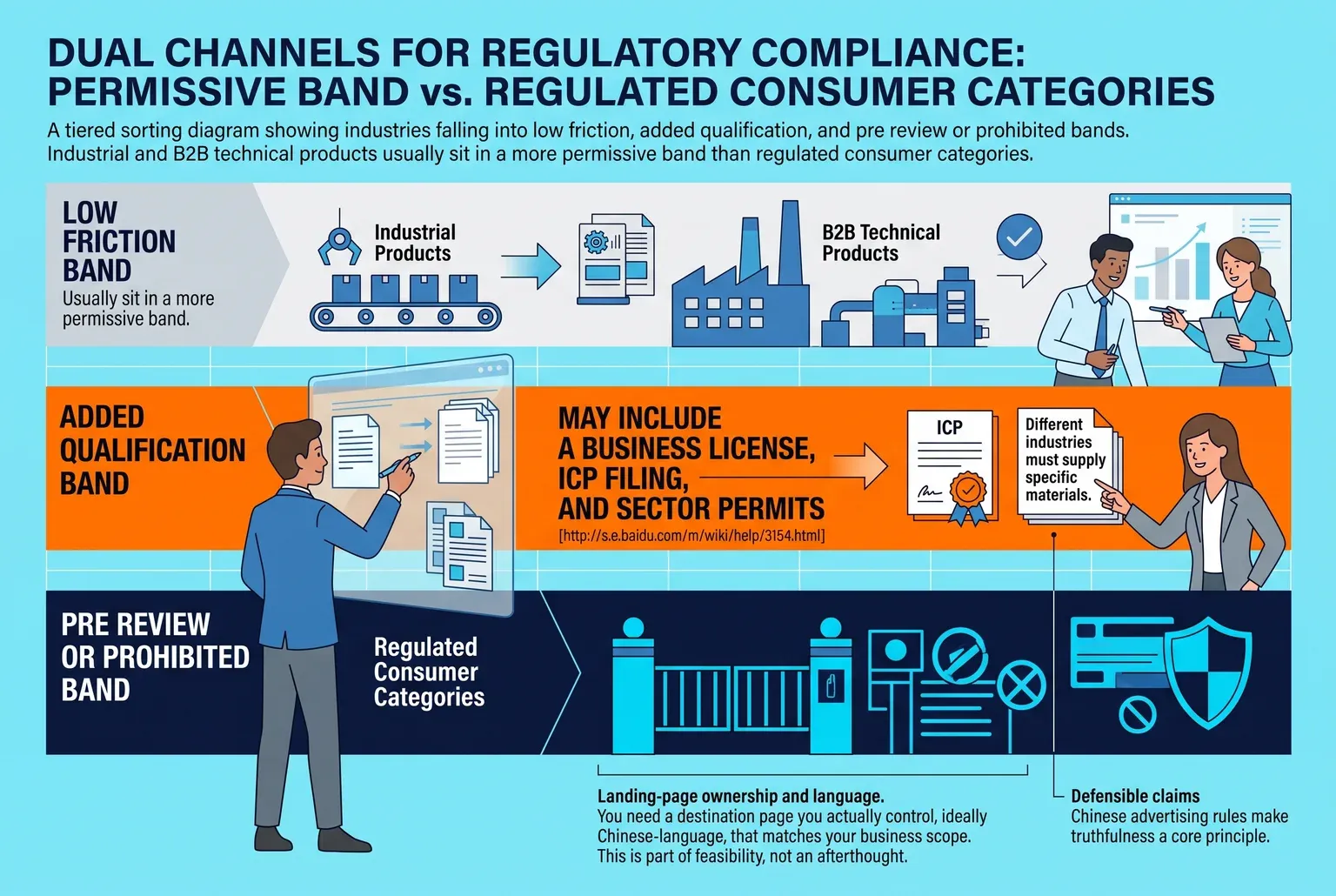
- Target industry. Some sectors are straightforward; others carry heavy screening. Healthcare, pharmaceuticals, medical devices, health foods, finance, and education face additional qualification and claim restrictions. The Internet Advertising Measures require pre-review for ads involving medical services, drugs, medical devices, health foods, and similar categories before publication, and prohibit online prescription-drug ads outright. Prohibited content such as gambling, fraud, and piracy is off the table entirely.
- Promoted product or service. Different industries must supply specific materials, which may include a business license, ICP filing, and sector permits depending on what you sell. Industrial and B2B technical products usually sit in a more permissive band than regulated consumer categories.
- Landing-page ownership and language. You need a destination page you actually control, ideally Chinese-language, that matches your business scope. This is part of feasibility, not an afterthought, and the next section covers it in detail.
- Defensible claims. Chinese advertising rules make truthfulness a core principle and hold the advertiser responsible for the authenticity of content. Absolute terms like "国家级," "最高级," and "最佳" are restricted, and data, rankings, or award claims need real substantiation. Enforcement increasingly focuses on cited content in ads.
- Application route. Finally, is there a local agency channel willing to take your case to Baidu's review?
Passing this screen tells you a case looks reasonable. It does not tell you the answer. General indicators are not approval; final eligibility rests with Baidu's review and applicable sector rules. Where a specific regulatory question touches licensing or liability, get qualified counsel rather than relying on any agency's read.
What Documents Do You Need to Apply for Baidu Ads?
There is no single universal document list that fits every applicant. Baidu itself notes that requirements can vary by industry and region, and advises confirming the applicable list with a marketing adviser. Treat preparation as a set of categories, not a fixed form.
Typical Corporate Materials
For an enterprise account, Baidu documentation describes a baseline package that can include a business license or equivalent registration, organization or enterprise proof, legal-representative or authorized-person identification, and authorization documents where an agency or third party acts on your behalf. The names on these materials should match the entity behind the website and the ads. This underpins a legal obligation: Chinese advertising rules require advertisers to hold valid subject identity, administrative licenses, and citation materials that are true, legal, and effective, and require operators to verify and register advertiser identity before publication.
One thing the public Baidu sources do not settle is whether every foreign-language document must carry an official Chinese translation or notarization. Translation and notarization discussion in the market is largely provider practice, not a documented Baidu rule, so confirm it for your specific case rather than budgeting for it as a certainty.
Possible Industry-Specific Materials
Regulated sectors carry extra weight. Depending on what you sell, a business license, ICP filing, and sector permits may apply, and Baidu materials reference additional proof such as trademarks, copyright, test reports, or administrative permits when relevant. A road transport permit is one example the documentation gives. Industrial and technical B2B products usually need less than regulated consumer categories, but "usually" is not "always."
Landing-Page Readiness
The destination page is part of feasibility, not a post-approval chore. Baidu requires promotion sites to meet construction completeness, content consistency, and content legality before account information passes review. In practice that means a page carrying clear advertiser identity, a company or product introduction, and detailed contact information, with the company name matching the account and the business content matching your stated industry.
Beyond those baseline signals, plan for accurate product descriptions, substantiated claims, mobile usability, pages that actually load, and ad copy that aligns with what the destination shows. Absolute terms like "最佳" or "第一" are restricted, and any data or rankings need a real source on file.
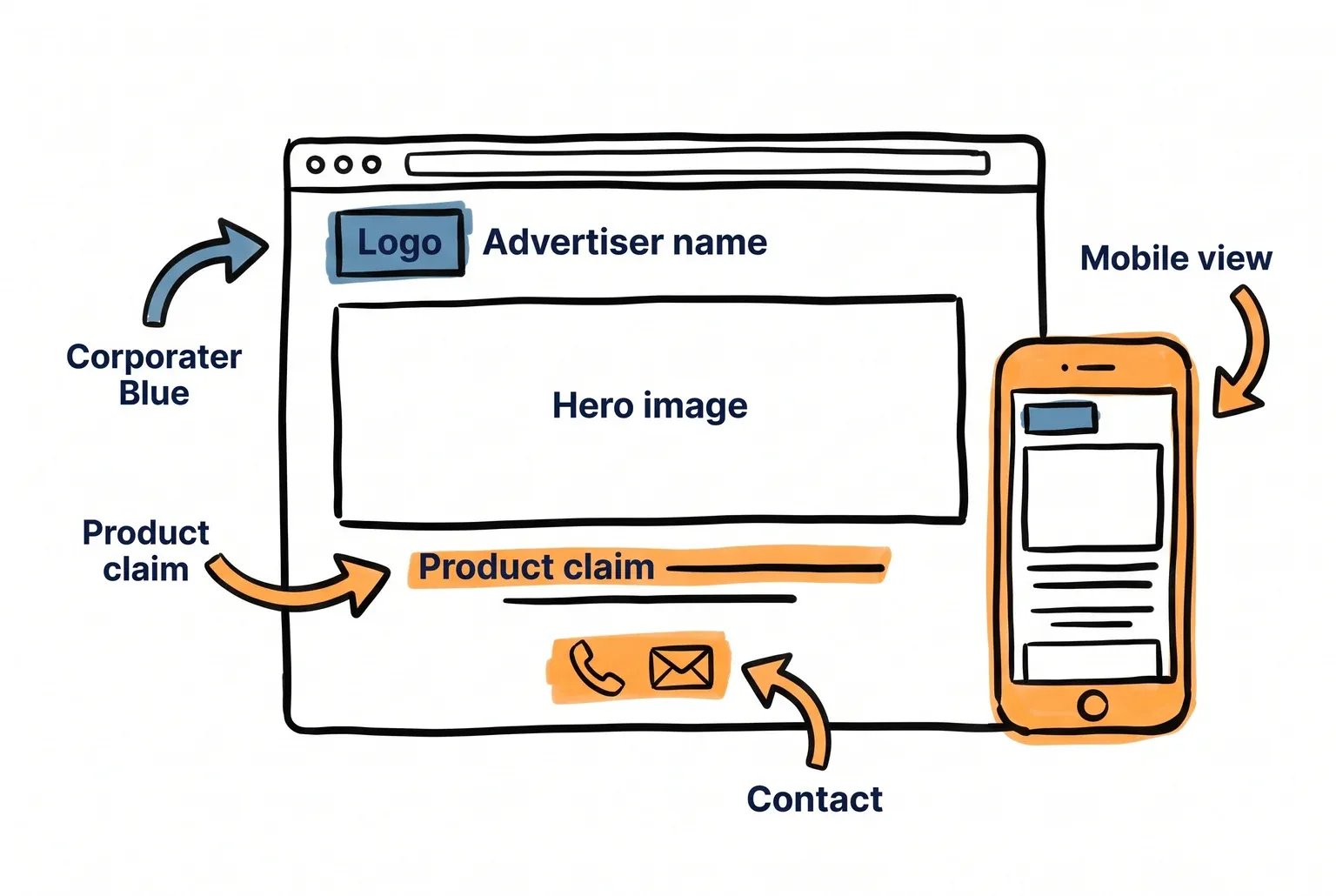
A weak page can stall an otherwise eligible application, which is why it belongs in the feasibility conversation from the start.
Common Misconceptions About Running Baidu Ads as a Foreign Company
A few beliefs derail applications before they start. Here are the ones worth correcting early.
Is an English-only website enough? Usually not. Baidu reviews the promoted site for completeness, content consistency, and legality, and expects the destination to match your stated business. An English page with no Chinese content, thin information, or pages that fail to load in China can stall an otherwise eligible case.
Does an agency account remove compliance checks? No. An agency can prepare and submit materials, but Baidu still runs its qualification review and separately filters keywords, creatives, and destination URLs. The platform reviews roughly 3.5 billion new ads a day and rejects about 20 million, and content that fails technical filtering will not go live.
Does approval on Google or another platform transfer to Baidu? Treat it as no. Baidu applies its own qualification checks and its own advertising rules. Clearance elsewhere carries no weight in a Baidu review.
Does paying secure access? Corporate bank-account verification confirms who you are, but it only verifies subject identity, not industry qualifications or rights certificates. Payment readiness is one step, not the whole review.
Does an open account prove the campaign will work? No. Account-opening feasibility, ad approval, and campaign performance are three separate decisions. Passing one says nothing about the next.
The blockers that most often need remediation: incomplete business-license information, company names that do not match submitted materials, unclear website ownership, inaccessible or thin pages, weak Chinese content, and exaggerated claims. Most of these are fixable. Applications may be rejected when license details are incomplete or names are inconsistent, and Baidu provides reasons for resubmission.
The cases that may not be feasible at all: restricted or prohibited industries, missing mandatory sector licenses, and no appropriate submission channel for your entity. Those are the ones worth identifying before you spend.
What Does a Baidu Ads Feasibility Check Actually Cover?
Do the assessment before you commission a full China website or a broad localization program. A good feasibility check answers a narrow question first: can this specific company get access, and is there enough Chinese search demand to justify going further? That is a smaller and cheaper question than full market fit, and it maps to a test-before-you-localize approach where a tightly scoped pilot validates demand before deeper investment.
A credible pre-application review should produce these outputs:
→ Likely application route, given your entity type and the channels available at the time of review.
→ A document gap analysis: which registration, identity, authorization, and sector materials you already have, and which are missing.
→ An industry and claim review, flagging whether your sector needs extra permits and whether your ad copy uses language that will fail review.
→ Landing-page readiness, including whether your current site carries enough Chinese-market credibility or whether a minimum viable Chinese-language page is needed first.
→ A Chinese keyword opportunity estimate. Baidu's own Keyword Planner reports average weekly search volume and competition intensity, which tells you whether buyers are actually searching for what you sell.
→ Technical accessibility, meaning whether your pages load reliably inside China.
→ Tracking needs, so inquiries, form fills, and lead routing are measured from day one rather than reconstructed later.
→ Expected remediation, with a plain list of what must be fixed and roughly in what order.
→ Unresolved approval risks, stated honestly. Some cases carry review outcomes no assessment can settle in advance.
Screening improves your odds and removes avoidable rejections. It does not guarantee acceptance. Baidu runs its own qualification and content review regardless of how well you prepare, so treat the check as risk reduction, not a promise.
Keep two things separate in your head. Access feasibility asks whether you can open an account and get ads live. Commercial validation asks whether the traffic converts, whether lead quality holds up, and whether your cost per lead makes sense for your margins. A pilot running four to eight weeks can start answering the second question, but only after the first is settled. Confirm you can get in before you spend on translation, media budget, or a full site build.
What condition is your current website in for a Chinese audience right now?
What to Prepare Before Requesting a Feasibility Review
Send enough in the first pass that a reviewer can judge your case, not just acknowledge it. A useful starter packet covers:
→ Company registration jurisdiction and exact legal name, matching your incorporation certificate.
→ Products or services you want to promote, with a short description of each.
→ Target geography inside China, since headquarters location and market can affect reseller routing and whether an international or domestic pathway is open.
→ Any industry licenses or permits, especially for regulated sectors like finance, medicine, and supplements, where extra qualifications are required.
→ Your current website plus the specific landing pages you plan to run, with Chinese-language assets if you have them.
→ Prior Baidu account history, if any.
→ An indicative monthly budget range and your launch objective, whether that is lead generation, brand presence, or a scoped test.
A complete first submission lets a reviewer confirm one of four outcomes: proceed, remediate specific gaps, investigate eligibility further, or pause because the case is not workable right now. Any of those is more useful than a vague maybe.
Get the feasibility read before you commission translation, a China site build, or media budget. It is the cheapest step you will take, and it tells you whether the rest is worth doing.
What would a clear yes or no on account access change about your China plan this quarter?
Sources
- 百度搜索推广政策中心 — Baidu
- Baidu Marketing agency authorization query guidance — Baidu Marketing
- Baidu Ads account-opening process and contact channels — Baidu
- Baidu promotion service contract — Baidu
- WeChat Baidu FAQs: Essential Insights for Businesses - China B2B Digital Marketing Agency | Vertical — Vertical
- 百度搜索推广全面实施对公账户打款验证 — Baidu
- 百度搜索推广政策中心 — Baidu
- 做百度推广需要哪些条件?百度推广效果如何_百度营销开户_企业网站网络推广_百度关键词推广 — 百度
- 互联网广告管理办法 — 国家市场监督管理总局
- 中华人民共和国广告法 — 全国人民代表大会常务委员会
- 市场监管总局关于发布《广告绝对化用语执法指南》的公告 — 国家市场监督管理总局
- 互联网广告管理办法 — 国家市场监督管理总局
- 在开户过程中,如果遇到审核不通过的情况,应该如何处理_百度广告推广 — Baidu
- Test Before You Localize: Baidu Ads as China Market Entry ... — dminorstudio
- 搜索推广-百度营销学堂 — 百度营销
- 9 Steps to Open a Baidu PPC Account — iStarto China
- The Complete Guide to Baidu Search Ads (Baidu PPC) — AppInChina
About The Author

Stephen Tseng
Co-founder of dminorstudio. regularly writes about the intersection of AI, SEO, and B2B growth strategy.
Frequently Asked Questions About Baidu Ads for Foreign Companies
Can a foreign company open a Baidu Ads account without any Chinese presence at all?
It is possible in some cases, but not guaranteed. Foreign companies without a mainland Chinese legal entity can apply to Baidu directly, but the most common route is through a local Baidu marketing agency that submits the application and handles review communication on your behalf. Whether your specific case is eligible depends on your industry, the documents you can produce, and Baidu's review of your application.
How long does it take to get a Baidu Ads account approved?
The timeline varies depending on your industry, the completeness of your documents, and whether your landing page meets Baidu's requirements. Regulated sectors like healthcare or finance typically take longer because of extra qualification checks. A well-prepared application with all required materials moves faster than one that needs multiple rounds of resubmission. Your agency or reviewer should be able to give you a realistic estimate once your documents are assessed.
Do you need an ICP filing to run Baidu Ads as a foreign company?
An ICP (Internet Content Provider) filing is required for websites hosted on servers inside mainland China. If your landing page is hosted outside China, an ICP filing may not be a hard requirement, but your pages still need to load reliably inside China and meet Baidu's content standards. For certain regulated industries, an ICP filing may be expected regardless. Confirm the specific requirement for your case before assuming it does or does not apply.
What happens if your Baidu Ads application is rejected?
Baidu provides reasons when an application does not pass review. Common reasons include incomplete business-license information, name mismatches between submitted materials and the website, unclear website ownership, and pages that fail to load or contain thin content. Most of these issues are fixable. Once gaps are addressed, you can resubmit. Cases involving prohibited industries or missing mandatory sector licenses are harder to remediate and may not be workable through resubmission alone.
Is Baidu PPC worth it for B2B companies targeting China?
It depends on whether Chinese buyers are actively searching for your product or service category on Baidu. The keyword planner can tell you search volume and competition before you commit. For B2B companies selling industrial products, technical equipment, or professional services, Baidu search ads can be a direct channel to procurement teams and technical decision-makers who are actively researching suppliers. The key is validating search demand before investing in a full localization program.
Can you run Baidu Ads without a Chinese-language website?
Running ads with only an English-language website creates real practical problems. Baidu reviews the destination page for completeness, content consistency, and legality. A page with no Chinese content, thin information, or one that fails to load properly inside China can block an otherwise eligible application. Even a minimum viable Chinese-language landing page covering your company introduction, product or service description, and contact details improves your chances of passing review.