
China Runs on a Different AI Stack
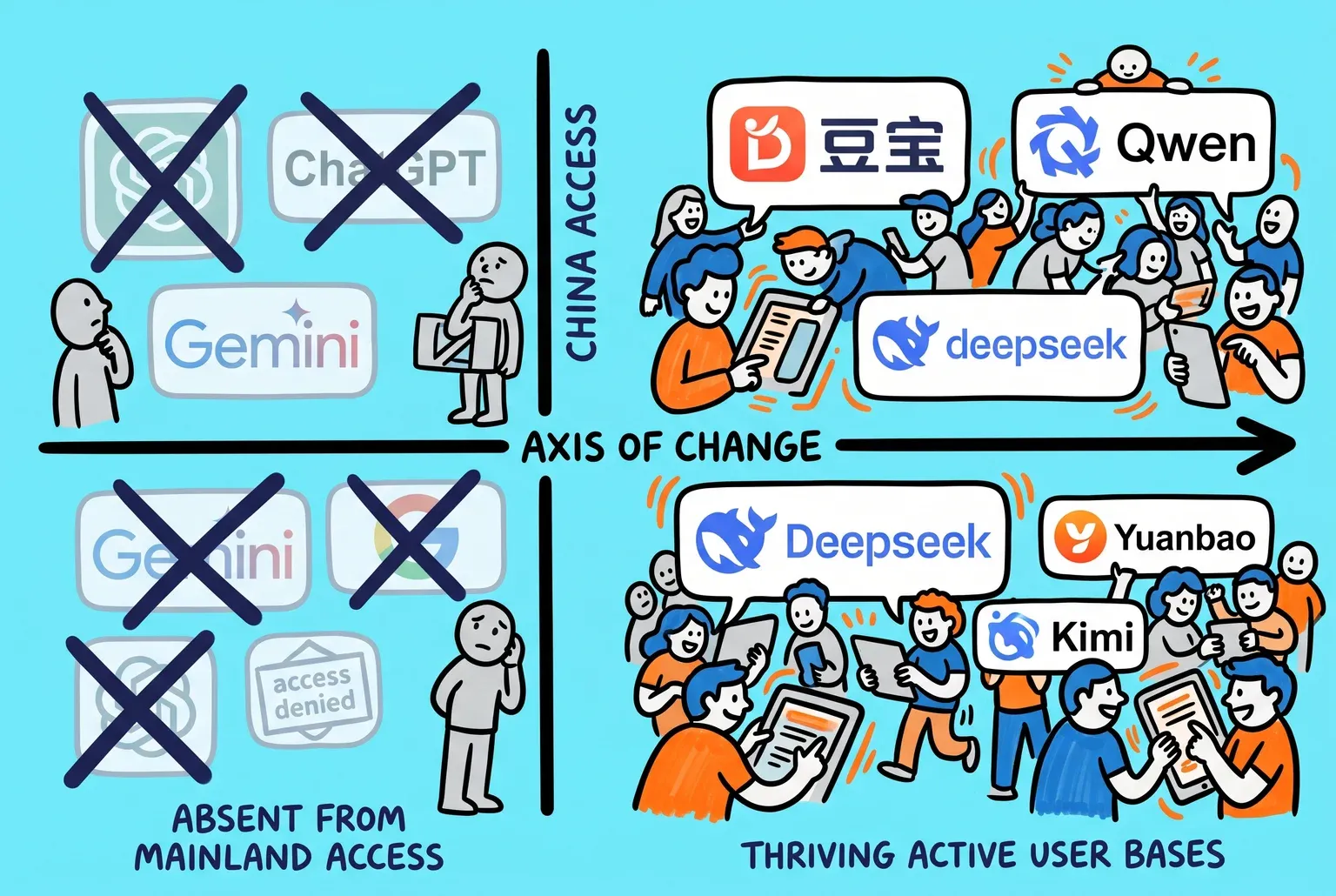
Your ChatGPT playbook is dead on arrival here. ChatGPT and Gemini have no official, direct access for users on mainland Chinese networks. No app, no account, no clean workaround for a market you're trying to sell into. Optimizing your content for OpenAI's crawlers while targeting Chinese buyers is optimizing for an audience that isn't there.
Meanwhile the audience that is there just got enormous. China had 602 million generative-AI users by December 2025, 42.8% of the country's entire internet population, up 141.7% in a single year. By June 2026, China's AI-native apps hit roughly 499 million monthly active users, an 85.4% jump year over year. Doubao alone reported about 382 million active users that same month, with Qwen (Tongyi Qianwen) at 167 million and DeepSeek near 130 million.
The money backs this up. MarketsandMarkets puts China's generative AI market at $7 billion in 2025, growing to nearly $99 billion by 2030 at a 45.8% compound annual growth rate. Global Market Insights projects 36.8% annual growth from 2026 to 2035. Either estimate points to the same conclusion: this market is compounding faster than almost anything in Western AI search, where the global AI search engines market grows at a comparatively modest 14.2% CAGR through 2033.
So the platforms are different. The users are different. The growth curve is steeper. And the companies still running their GEO strategy through a Western lens are optimizing for engines their buyers never open.
The next question is what "getting cited" even means when the engine, the index, and the regulator are all Chinese.
Why Western GEO Strategies Don't Work in China
GEO, wherever you practice it, means the same basic thing: structuring content so an AI answer engine will pull it into a generated response instead of just ranking it as a link. Traditional SEO wins a spot on the results page. GEO wins a spot inside the answer itself, whether or not the reader ever clicks through.
That part translates fine. What doesn't translate is everything underneath it.
Western GEO assumes an open web. Google's AI Overviews and ChatGPT Search crawl a shared pool of websites, and a well-structured page has a real shot at getting pulled in regardless of platform. China runs on walled gardens. Baidu, WeChat, Xiaohongshu, Douyin, and Weibo each hold their own content, largely closed off from each other's crawlers, and generative engines built by companies that own those platforms lean on their own walled content first.
The differences stack up fast:
- West: one open index feeds many engines. China: each engine pulls mostly from its owner's ecosystem.
- West: your own website is a viable citation source. China: research on Chinese-language generative search found third-party content dominates citations, while direct corporate-site citation is uncommon.
- West: optimize once, get picked up broadly. China: treat each engine as its own campaign, since different platforms and even different interfaces of the same platform return different sources for the same query.
- West: compliance is mostly about crawlability. China: content sits inside a regulatory system governing information security, data handling, and what counts as permissible content, which shapes what an engine will surface at all.

None of this makes China GEO harder in some abstract sense. It makes it a different sport, played on six different fields, and that's the frame the next section builds on.
Six China AI Engines, Six Owners, Six Different Games
Every one of China's top AI engines is owned by a company that already runs a piece of the internet, and that ownership shapes what the engine surfaces. Here's who you're actually dealing with.
DeepSeek (深度求索) comes out of High-Flyer, a quantitative hedge fund, and is effectively controlled by its founder, Liang Wenfeng. That background shows: DeepSeek is built around reasoning, numerical analysis, and structured decision-making, and its models are open-weight, so enterprises can self-host and fine-tune them rather than depend on a hosted API. For B2B marketers, DeepSeek is less a discovery channel and more a positioning target: it's where technical buyers doing due diligence, comparing vendors, or building internal tools might encounter your company's data and documentation.
ERNIE Bot (文心一言, Wenxin Yiyan) is Baidu's chatbot, and Baidu has said it will keep folding ERNIE 4.5 and its reasoning model ERNIE X1 into its wider product stack, with Baidu Search named as one of the services receiving these capabilities. Because it sits on top of Baidu's search index, ERNIE is the closest thing China has to an SEO-adjacent AI engine, and it's usually the first stop for B2B GEO work.
Doubao (豆包) is ByteDance's assistant, tied to the traffic and short-video habits of Douyin's user base. It matters if your buyer research shows up on video-first platforms rather than text search.
Tongyi Qianwen, marketed simply as Qwen, is Alibaba Cloud's model line. Alibaba has started folding the Qwen app into commerce and lifestyle services, and Alibaba has stated Qwen models are already used by more than 90,000 corporate clients in China, which makes it relevant for procurement and supply-chain-adjacent B2B queries.
Kimi comes from Moonshot AI, a Beijing startup founded in 2023, with Alibaba holding roughly 36% of its equity as its largest outside investor. Kimi is known for long-context handling, useful for professionals working through lengthy technical documents or contracts.
Tencent Yuanbao (腾讯元宝) runs on Tencent's Hunyuan model and connects to WeChat, China's dominant messaging and content platform.
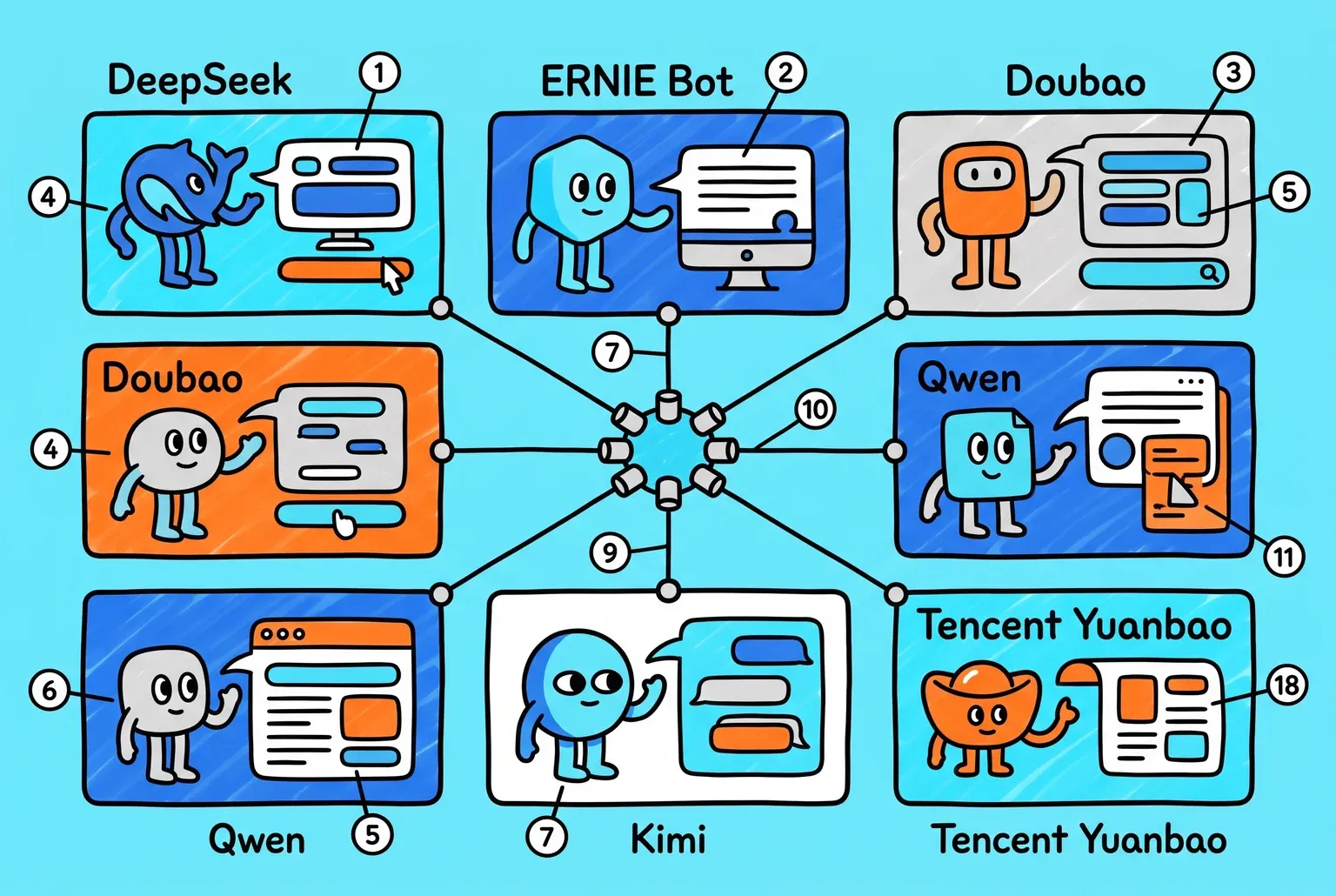
Six engines, six owners, six different content pools to win. The next section explains how each one decides what to actually cite.
What Determines Whether Your Content Gets Cited in a China AI Answer?
Each engine runs the same basic pipeline: pretrained model knowledge, a retrieval layer that pulls current documents at query time, a ranking step that scores what it found, and a generation layer that writes the answer and decides what to cite. Tencent has published the clearest public description of this for Yuanbao, which runs query planning, chunk-level retrieval, multi-objective ranking (relevance, authority, timeliness, task satisfaction), answer generation, and citation feedback as a chain.
The distinction that matters for marketers: your brand can exist in a model's training data without ever getting cited in an answer. Training data builds background knowledge. Citation happens at retrieval time, based on what documents the engine can find and trust right now. A company can be "known" to DeepSeek and still invisible in the answers DeepSeek actually gives.
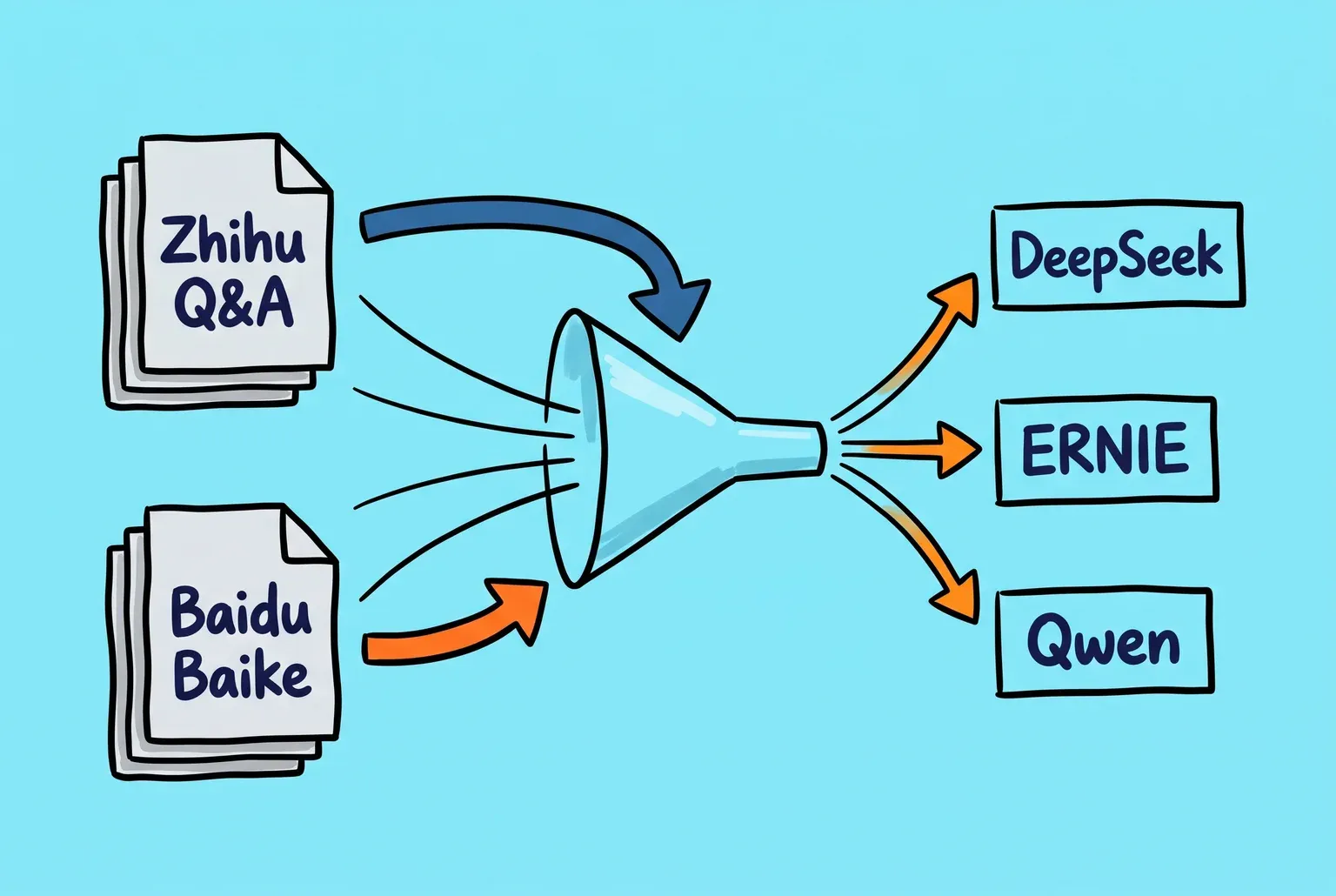
Two source types show up again and again in the research on Chinese engines. Zhihu, the Q&A platform, produces high-voted expert answers that DeepSeek, ERNIE, and Qwen all appear to retrieve from regularly, according to analyses from Eastbound Research and Sanbi.ai. Baidu Baike, the encyclopedia, functions as foundational entity knowledge, cited disproportionately in ERNIE's answers and durable across training cycles for other engines too.
Ownership does shape access. Baidu's own developer documentation suggests ERNIE has structural ties to Baidu's index, but no independent, controlled data proves ERNIE universally favors Baidu-owned sources over others. Treat that as a plausible advantage, not a rule. Each engine draws from a different pool of connected search, content, and database ecosystems, which means publishing only on an English corporate site can leave you outside the pools most of these engines actually retrieve from.
What to Sort Out Before You Publish Anything for China GEO
Two separate problems sit under China GEO: where your content lives, and how it reads once it gets there. Get either one wrong and the engines never see you.
Start with hosting. An ICP license (Internet Content Provider filing) is mandatory for any website hosted on a server inside mainland China, no matter who the audience is. Host outside mainland China, on servers in Hong Kong, Singapore, or the US, and you skip the ICP requirement entirely. Most international B2B companies should host offshore for exactly this reason: getting an ICP license generally requires a mainland legal entity, which most foreign companies entering the market don't have yet. This is a genuine constraint, not a formality, so confirm current requirements with local counsel before committing to a hosting plan.
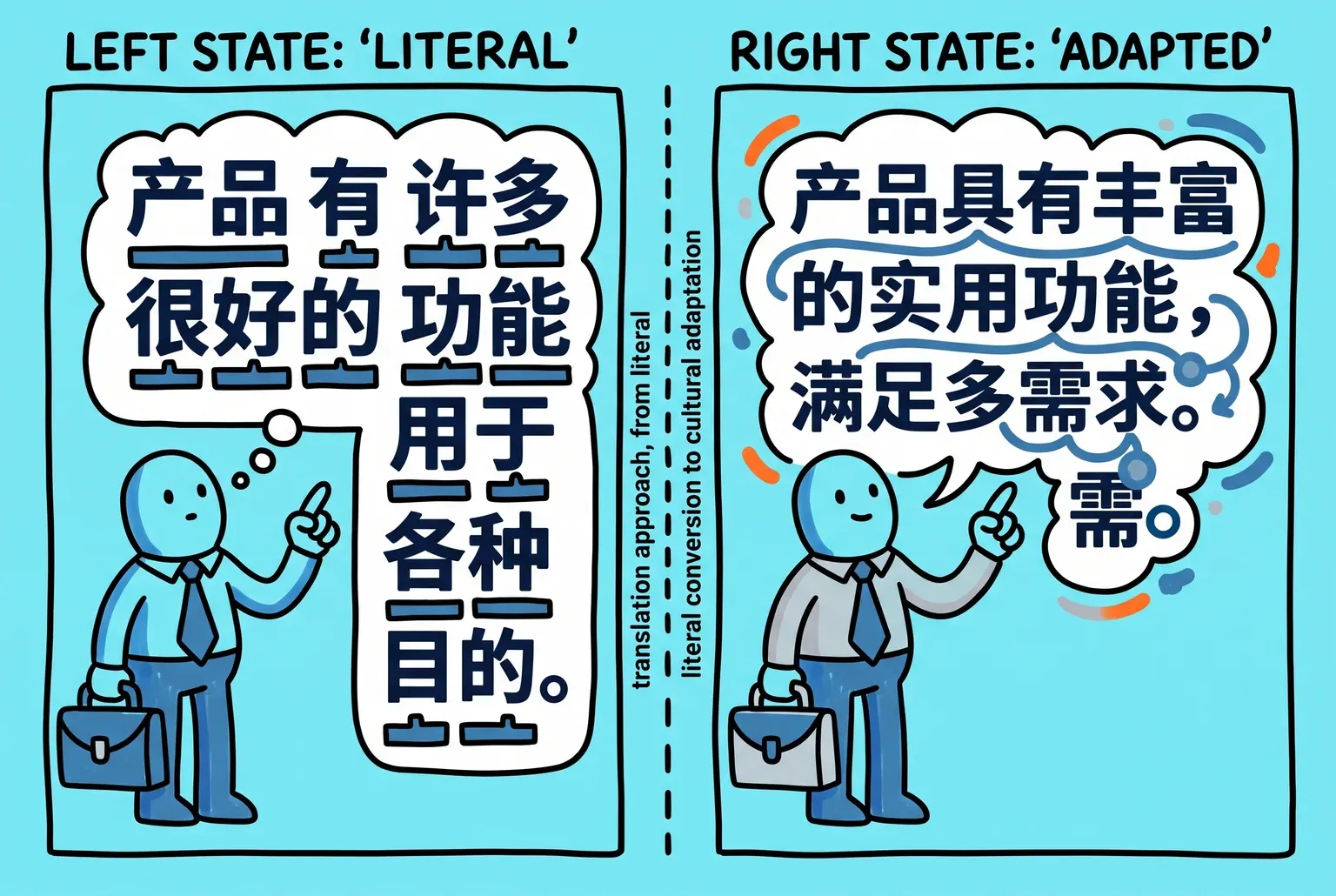
The second problem is language. Translating your English site into Simplified Chinese word for word will not get you cited. Chinese-language localization guides consistently point to adapting intent, idioms, and examples rather than translating literally, because a technical phrase that's clear in English often reads as awkward or meaningless once converted directly.
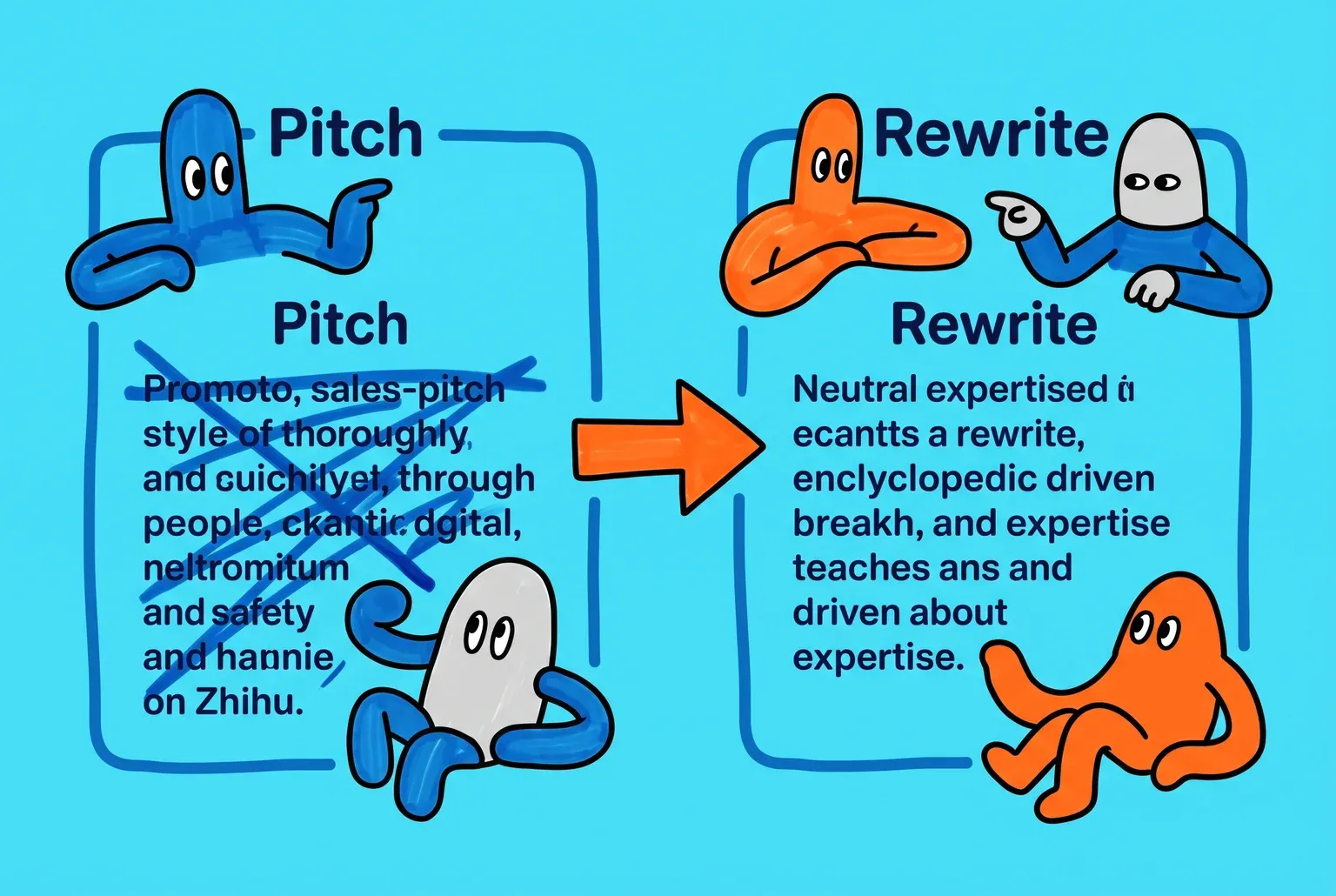
Formatting matters as much as wording. Content built for WeChat should run short, mobile-friendly paragraphs with a single clear call to action. Zhihu rewards an expert Q&A structure with concrete examples. Baidu Baike wants a neutral, encyclopedic tone with sourced claims, not marketing language. Writing one English press release and running it through a translation tool for all three will produce content none of them favor.
A practical fix: keep a bilingual glossary of product and technical terms, write a native-Chinese draft for each platform separately, and run every piece through native-speaker review before it goes live. That single step catches most of the mistakes that keep foreign companies invisible to these engines.
Six Moves That Actually Get You Cited by China's AI Engines
Two source types dominate what China's AI engines pull from: Baidu Baike entries and Zhihu Q&A threads. Everything below builds toward one or both.
- Build or fix your Baidu Baike entry first. This is the single highest-leverage move, since ERNIE and DeepSeek both lean on Baidu-indexed content for factual answers. Write a neutral, encyclopedic overview covering your industry, founding date, founders, and core products, roughly 100 to 350 Chinese characters based on common practice, though you should confirm current length rules on the platform. Strip anything that reads like marketing copy before submitting. Baidu Baike typically reviews entries within one to three business days, though this varies by account and page.
- Seed Zhihu with questions you'd want to answer anyway. Don't just post generic company content. Create or answer discussable questions like "what matters most when choosing a supplier in [your category]," and structure the answer around frameworks, trade-offs, and real use cases. Nanjing Marketing Group's guidance on this is blunt: repeated sales pitches don't work with Zhihu users. Soft-sell, teach, and let your expertise do the selling.
- Run WeChat content like a search asset, not a newsletter. Put your brand, industry, and product keywords in the title, repeat them in the opening line, and use them again in subheads and the closing paragraph. Optimize the preview text WeChat shows in search results, since a clear problem-solving signal there drives click-through. Aim for 1,500 to 3,000 Chinese characters per piece, built around one specific pain point. For a deeper look at how WeChat works as a B2B channel, see WeChat marketing strategies for B2B growth in China.
- Gate premium content behind a follow-and-form action. A teaser article pointing to a whitepaper or report, unlocked only after a WeChat follow and form fill, is a proven B2B lead tactic on the platform. Pair it with a direct CTA, "Contact Us," "Download Insights," or "Join Our Webinar," placed where the reader has just finished the value part of the article.
- Get covered in trade media that lives on WeChat. Many of China's influential industry publications publish through WeChat Official Accounts. A case study or interview placed there does double duty: human readers see it, and it becomes another citable source for the engines pulling from that ecosystem.
- Match content structure to platform, every time. Baidu Baike wants neutral and sourced. Zhihu wants expert and example-driven. WeChat wants short, mobile paragraphs with one CTA. Writing one piece and reformatting it slightly for all three is why most foreign companies stay invisible.
What to Do First When You Can't Do Everything
Six engines, three platforms, a licensing process, and a translation problem. Nobody has budget for all of it in month one.
Start with fit, not tools. Ask who your buyer actually is, whether your category gets researched or referred, and how much internal bandwidth you have to sustain content. A phased entry framework built for resource-constrained B2B teams recommends narrowing initial effort to two or three core surfaces, not six.
For most B2B entrants, that means WeChat Official Account and Baidu first. WeChat gives you a home base and a channel Chinese buyers expect any legitimate company to have. Baidu gives you the search visibility that ERNIE and DeepSeek both draw from. LinkedIn, Xiaohongshu, and Douyin come later, and only if your buyer actually spends time there.
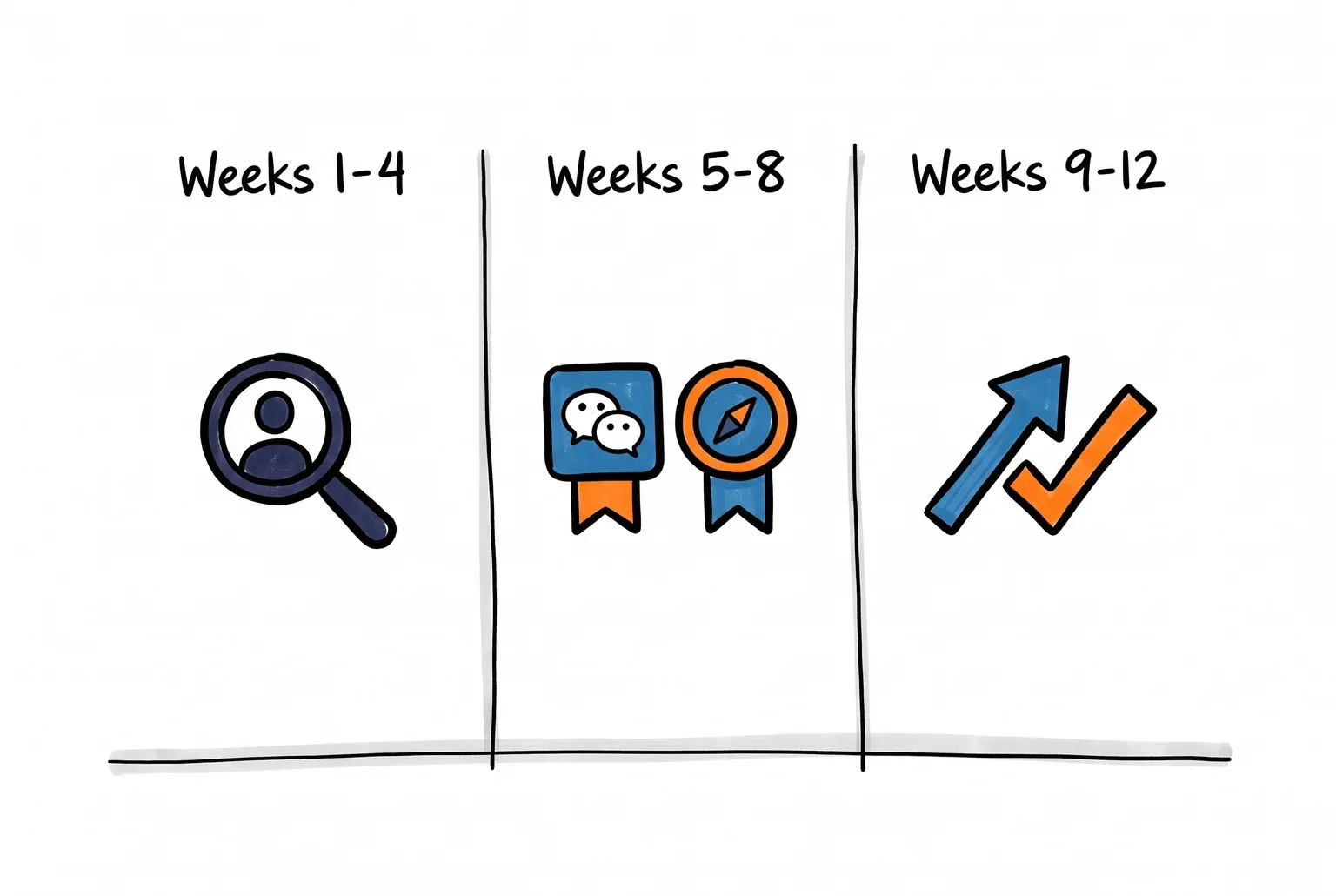
In practice: weeks one through four, lock down buyer fit and get your WeChat Official Account and Baidu Baike entry live. Weeks five through eight, publish a small batch of WeChat and Zhihu content built around real buyer questions. Weeks nine through twelve, review what's getting engagement and expand only where you see it.
Set expectations accordingly. A functional digital presence typically takes 3 to 6 months to establish, and organic lead generation usually doesn't become meaningful until the 6 to 12 month mark. Anyone promising faster is selling you something.
Which of the six engines is most likely to matter for your buyers, and have you actually tested that assumption yet?
China GEO is a market entry decision, not a marketing tactic
Six engines, three content platforms, an ICP filing process, and a translation problem that goes deeper than swapping words. That's the real workload behind China GEO, and it doesn't fit inside a Western AI-search checklist.
The companies that get this right treat it the way they'd treat opening an office in a new country: pick the right first market, staff it properly, and give it time to work. The companies that get it wrong try to bolt a six-engine, three-platform strategy onto a team built for ChatGPT and Google, then wonder why nothing shows up in DeepSeek's answers six weeks later.
Your buyers in China are already asking DeepSeek, ERNIE, and Doubao for vendor recommendations. Whether your company shows up in those answers depends on decisions you make now: which platforms to build first, whether you handle licensing correctly, whether your content sounds like a Baidu Baike entry or a translated brochure.
None of this replaces the fundamentals of good B2B marketing. A clear value proposition, a specific buyer, content built around real questions. China GEO is where those fundamentals meet a different set of engines, a different set of rules, and a different clock. For a broader view of how China B2B digital marketing channels and strategies fit together, that's a good next read.
Start with one engine, one platform, one buyer question you know is real. Build from there.
Start with one engine, one platform, one buyer question you know is real. Build from there.
Sources
About The Author

Stephen Tseng
Co-founder of dminorstudio. regularly writes about the intersection of AI, SEO, and B2B growth strategy.
FAQ
Is Baidu SEO still relevant if AI engines like DeepSeek and ERNIE are taking over search?
Yes. Baidu SEO and China GEO are closely linked, not competing strategies. ERNIE Bot sits on top of Baidu's search index, which means strong Baidu SEO signals, like indexed pages, Baidu Baike entries, and backlinks from Baidu-trusted sources, directly improve your chances of getting cited in ERNIE's AI answers. Running Baidu SEO well is one of the most reliable ways to build the foundation that China's AI engines retrieve from.
Do I need an ICP license to run a China GEO strategy?
Not necessarily. An ICP license is only required if you host your website on a server physically located inside mainland China. Many international B2B companies host their Chinese-language content on servers in Hong Kong, Singapore, or the US, which avoids the ICP requirement and the need for a mainland legal entity. You can still publish on Baidu Baike, Zhihu, and WeChat from an offshore setup. That said, always verify current requirements with local legal counsel before finalizing your hosting plan.
How long does it take to start getting cited by DeepSeek, ERNIE, or Doubao?
Building a foundation, including a Baidu Baike entry, a WeChat Official Account, and initial Zhihu content, typically takes four to eight weeks of active work. Seeing meaningful citation in AI-generated answers usually takes three to six months, as the engines need time to index, retrieve, and rank your content through their retrieval pipelines. Organic lead generation from China GEO rarely becomes significant before the six to twelve month mark.
Can I just translate my existing English content into Chinese and publish it?
No. Word-for-word translation consistently underperforms because it doesn't adapt intent, idioms, or examples for a Chinese audience. Technical phrases that are clear in English often read as awkward or meaningless when converted directly. Each platform also has its own format expectations: Baidu Baike needs a neutral encyclopedic tone, Zhihu needs expert Q&A structure, and WeChat needs short mobile-friendly paragraphs. Write native-Chinese drafts for each platform separately and have a native speaker review everything before it goes live.
Which China AI engine should a B2B company focus on first?
For most B2B companies entering China, ERNIE Bot is the highest-priority starting point because it sits on Baidu's search index and is the closest equivalent to an SEO-adjacent AI engine. DeepSeek is also worth prioritizing if your buyers are technical decision-makers doing vendor due diligence. Doubao becomes relevant if your audience researches on Douyin and short-video platforms. Start with ERNIE and Baidu, then expand based on where your specific buyers actually spend time.